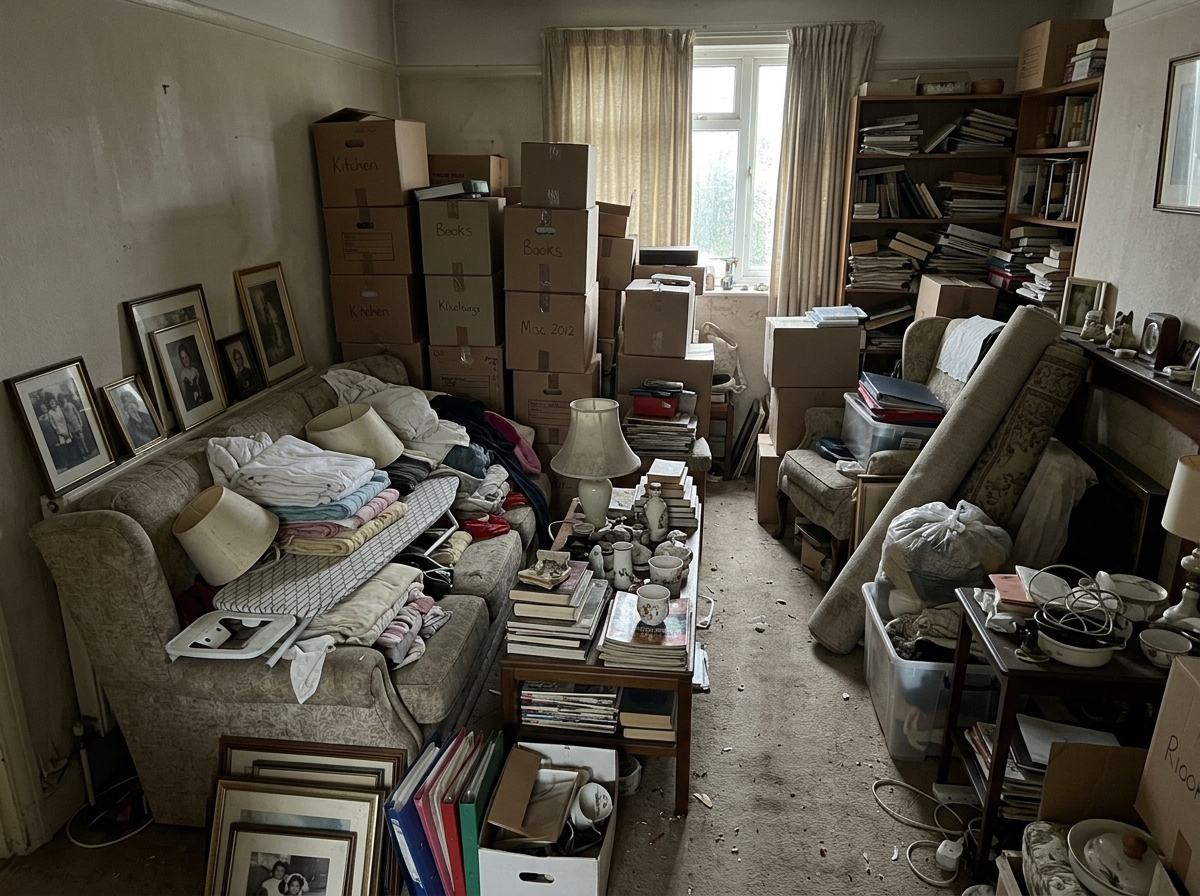
Maybe it's a parent's home. Maybe it's your own, ahead of a move or a downsize. Either way, you're standing in a doorway looking at rooms of furniture, boxes, and drawers, and the question isn't really "how do I sell this" — it's "how do I even start."
Here's the honest answer: you don't need to price three hundred things, host strangers for a weekend, or spend a month photographing items one by one. There's a quieter order to this. Start with decisions, not listings.
If the house belonged to someone who died, there's a layer underneath this one — probate, heirs, and what you're allowed to sell and when. How to liquidate an estate without hiring a company covers that part; this guide covers the clearing itself.
Start with four piles, not a plan
Before anything gets sold, everything needs a decision. Keep it to four categories and move room by room:
- Keep — things moving with you, or staying with the house
- Family — anything a sibling, kid, or cousin should see before a stranger does. Give this a real deadline: two weeks, then it goes in the sell pile.
- Sell — furniture, tools, kitchenware, décor, collections. When in doubt, it goes here — you'll be surprised what has bidders.
- Let go — donate or discard. Broken items, worn-out linens, expired pantry goods.
Don't price anything yet. Don't research anything yet. One pass, four piles, and the mountain becomes three or four smaller hills. The average American home holds around 300,000 items, a figure professional organizers cited in the Los Angeles Times — nobody sorts that in a weekend, and you don't need to.
What's worth selling (more than you think)
People routinely donate or dump things that would have found eager local bidders. Reliably strong categories:
- Solid wood furniture — dressers, dining sets, desks; mid-century pieces especially
- Tools — hand tools, power tools, garden equipment, shop gear
- Kitchen — cast iron, stand mixers, enameled cookware, full china sets
- Vintage electronics and instruments — turntables, cameras, guitars, keyboards
- Collections — records, coins, model trains, holiday décor by the bin
- Everyday useful things — ladders, coolers, patio sets, bikes, storage shelving
What tends not to sell: individual pieces of unbranded clothing, heavily worn upholstered furniture, and anything broken that isn't clearly a "for parts" item. Those belong in the donate pile, guilt-free.
The four ways to sell it all — what each really costs
Hire an estate sale company. They handle everything — and typically keep 35–45% of gross sales, per industry directories, often with minimum fees. For large, high-value estates that's sometimes worth it. For an ordinary house of good, usable things, the math is hard to like.
Run a garage sale. One or two Saturdays, weather permitting, selling only to whoever happens to drive by, at whatever price they'll haggle you down to. It clears less than you'd hope and takes more out of you than it looks.
List piece by piece on marketplaces. Each item means photos, a listing, messages, no-shows, and a porch meetup. For a whole house, that's weeks of part-time work that tends to stall out after the easy wins.
Run one local online auction for everything. Photograph it all once, let bidding set the prices, and hand items to paid winners during pickup windows you choose. One project, one timeline, done. That's the model this platform was built for — here's how it works for estate items, and the same approach works for a whole-garage clear-out.
How one auction clears the whole house
- Photograph the sell pile. Your phone, natural light, a few angles per item. This is the longest step — for a full house, give it an afternoon or two.
- Let the AI catalog it. Upload the photos and the system writes titles, descriptions, categories, and suggested starting bids for every lot. You review and adjust instead of writing from scratch — this is where whole-house selling stops being weeks of work.
- Set your auction to 5–7 days and publish. Local bidders find it, watch it, and compete — most bidding happens near the close.
- Winners pay automatically when the auction ends. No cash box, no invoicing, no chasing.
- Hold your pickup windows. A few scheduled hours; only paid winners come. Whatever remains goes to donation pickup, and the house is empty.
On the free tier the platform keeps 10% of what sells — no setup fees or minimums, which matters when you compare it against a 35–45% estate-sale commission. The seller page has a calculator if you want to run your own numbers.
Pace yourself — this is more than logistics
If this is a family home, every drawer has a memory in it, and there will be days the sorting simply stops. Let it. The four-pile pass can happen over two weekends instead of one; the auction can start a week later than you planned.
The one trap worth avoiding is indefinite deferral — boxing everything up "to deal with later." Roughly one in ten American households pays for a self-storage unit, and "later" quietly becomes years of rent for things no one goes back for. Selling well is also a way of finishing.
Frequently asked questions
How long does it take to sell a house full of stuff this way?
Most sellers go from first photo to empty rooms in two to three weeks: a few days of sorting and photographing, a 5–7 day auction, then pickup windows. An estate sale company often has a longer waitlist than that.
Do I have to price everything myself?
No. You set starting bids — and the AI cataloging suggests those for you. Bidding sets the final prices. Low starting bids feel risky but consistently draw more bidders and better results than high ones.
Can I do this if I live out of town?
Yes, with one trip. Sort and photograph in a long weekend, run the auction remotely, and return for the pickup windows — or have a local family member host them. Buyers pay online before pickup, so nobody handles money at the door.
What happens to things that don't sell?
Unsold lots stay yours. Most sellers schedule a donation pickup for the day after the auction windows close, so everything leaves the house on one timeline either way.
Is an auction worth it for ordinary household stuff?
Usually, yes. Everyday useful items — tools, shelving, patio furniture, kitchenware — are exactly what local bidders search for. A house of ordinary things regularly outsells expectations because dozens of buyers compete instead of one person haggling at a folding table.