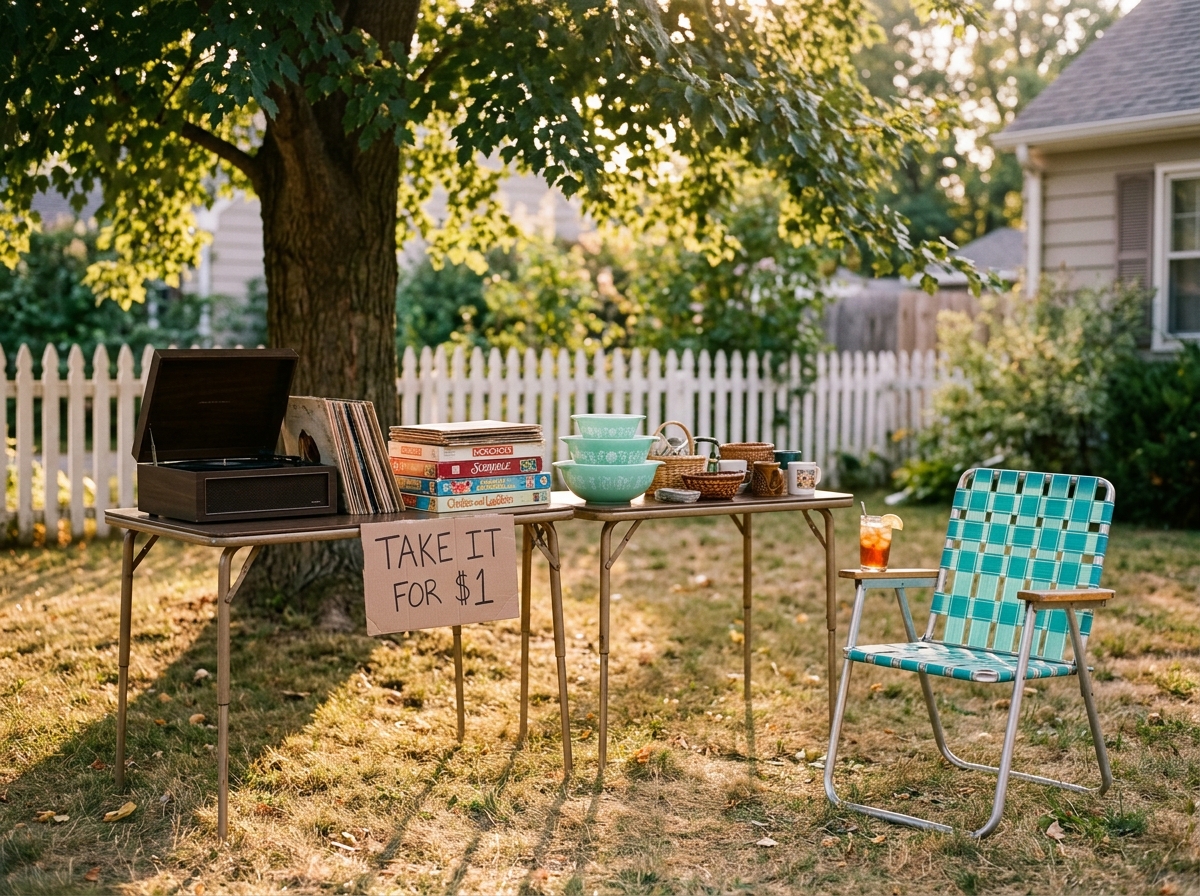
You've run a garage sale. You know the reality: early birds who want everything half-off before you've had coffee, someone haggling a $20 lamp down to $6, and a pile of stuff that still goes to Goodwill by noon. And you stood outside for four hours to make maybe $80.
Online garage sales work differently. Buyers bid against each other instead of negotiating with you. Items get seen by everyone in your metro area, not just people driving by that Saturday. And you control exactly when strangers come to your house — which is: only after they've won and paid.
This guide covers a normal weekend's worth of stuff. If you're clearing out an entire household, the sequencing matters more than the listing tactics — see how to sell a house full of stuff, or how to sell estate items online locally if the pieces are older and better than typical garage-sale fare.
Why online beats the driveway
Competition replaces negotiation. When multiple buyers want the same thing, the price goes up. That's the core difference. A garage sale sticker is a ceiling. An online auction starting bid is a floor.
Rain doesn't cancel it. Your auction runs on its own schedule — typically 3–7 days — independent of weather, your weekend plans, or whether you feel like being social.
You reach buyers who aren't out Saturday morning. The people who'd pay the most for your stuff — collectors, flippers, decorators, hobbyists — often aren't the ones driving around looking for yard sales. They're online.
Only winners come to your house. With an online auction, only people who've won an item — and already paid — get your pickup address.
What to include in your garage sale auction
Almost anything that's functional, branded, or interesting. Things that tend to do well:
- Tools — hand tools, power tools, anything with a recognizable brand name
- Furniture — solid wood pieces, unique chairs, vintage tables, mid-century anything
- Kitchen and cookware — cast iron, name-brand appliances, specialty gadgets
- Sporting goods — bikes, ski equipment, golf clubs, kayaks
- Vintage electronics — film cameras, turntables, vintage audio gear
- Musical instruments — any playable condition usually gets bids
- Sets and lots — a box of 10 kitchen tools or a collection of board games works when individual items aren't worth listing separately
What to leave out: brand-free clothing sold individually, anything truly broken with no disclosure, or items you wouldn't feel okay about a buyer inspecting at pickup and realizing look different than the photo.
Taking photos that sell
You don't need equipment beyond your phone. A few things that actually make a difference:
- Natural light. Open blinds, step outside, or move items near a window. Overhead fluorescent lighting washes out texture and color.
- Multiple angles. Front, back, label, and any damage. Buyers choosing between two listings will pick the one with more photos every time.
- Show flaws. A scratch that's clearly photographed is one the buyer accepted. One that isn't becomes a dispute at pickup. Be upfront.
- Give a sense of scale. Put a hand, a book, or a measuring tape next to furniture or anything where size matters.
Letting the AI do the heavy lifting
After you upload your photos, BackyardAuction's AI analyzes each item and generates a title, description, category, and suggested starting bid.
It's not perfect — you'll want to review the output — but it gets you 80–90% of the way there in seconds. Instead of writing 20 item descriptions from scratch, you're editing 20 that already exist. Most sellers find this cuts listing time from a couple of hours down to under one, even for a full auction.
Setting pickup windows that work for you
You don't have to be home for a full day. Set specific blocks: Saturday 10 AM–2 PM, Sunday 1–5 PM, whatever fits your schedule.
Winners see these windows during the auction and in their winner email. They come during those hours. You're home for the pickup block, hand off items as people arrive, and you're done.
It's much closer to a scheduled appointment than a traditional garage sale. And you're only dealing with people who've already bought something — not browsers who may spend nothing.
Getting paid without chasing anyone
When your auction closes, every winning bidder's card is charged automatically through Stripe. No collecting cash. No Venmo handles. No buyers who "forgot their wallet."
Your payout — minus the platform fee — hits your bank account within about 2 business days.
Casual (free tier): 10% fee per sale, no subscription, no setup fee.
Auction Pro ($249 per active month): Zero per-sale fees, unlimited auctions, only billed in months you run one. Better math once you're regularly moving more than about $2,500/month in goods.
For a one-time garage sale, the free tier is almost always the right call.
Frequently asked questions
How long should I run the auction?
5 days is a solid default. Long enough for buyers in your area to discover the listing and come back to bid. Most bid activity happens in the final 24 hours — but you need the earlier days for discovery.
What if something doesn't sell?
Unsold items are yours — no obligation, no consignment arrangement. You can relist in a future auction, donate, or keep them. There's no penalty for items that don't receive bids.
Can I sell multiple items as a single lot?
Yes. You can group items and list them as one lot — "Assorted vintage kitchen tools (10 pieces)" works well when individual items aren't worth photographing separately but have real collective value.
What's the fee?
Free to list, 10% of what sells on the Casual tier. No subscription required. Use the pricing calculator on the seller page to compare against the Auction Pro tier ($249 per active month, only billed in months you run an auction).