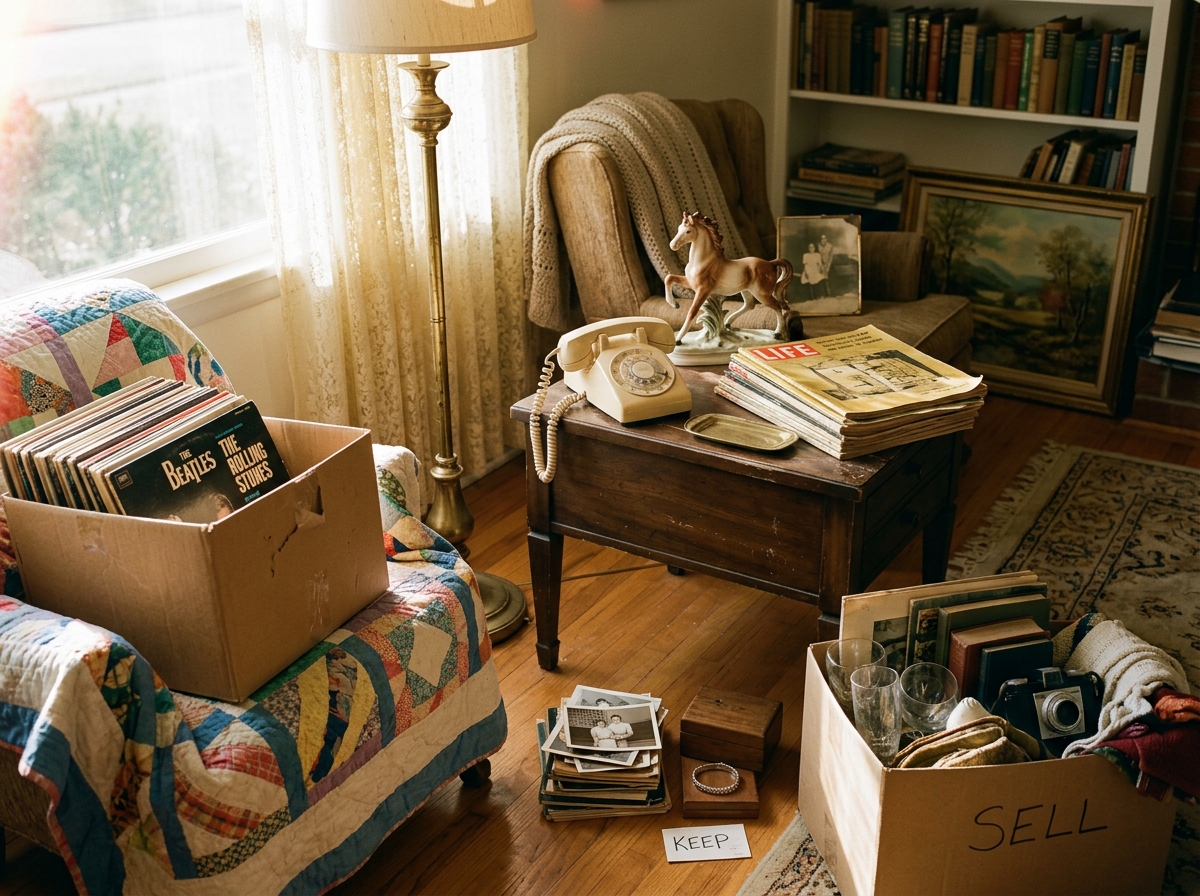
You have stuff to clear. Maybe it's a parent's house, a storage unit you've been avoiding, or just years of accumulated furniture that doesn't fit the new apartment. A traditional estate sale means strangers in your home from 7 AM on a Saturday, people low-balling everything, and half the stuff still sitting there at the end.
An online auction with local pickup works differently — and for most sellers, it returns more money with less friction.
If the job is bigger than a few boxes, start with the plan and come back here for the mechanics: how to sell a house full of stuff if you're clearing a whole home, or how to liquidate an estate without hiring a company if you're settling one.
Why local online auctions beat a garage sale
Competition drives prices up. At a garage sale, the person standing in front of you is the only buyer you have. In an online auction, anyone in your metro area can bid — and multiple interested buyers drive the final price higher than a sticker ever would.
No haggling. You set a starting bid. Buyers compete. You take the highest offer. There's no one trying to talk you down from $40 to $6 on a lamp.
No strangers all day. You set pickup windows — a few hours on specific days. Only winners come, and they've already paid. It's closer to a scheduled appointment than an open house.
You reach buyers who aren't driving around Saturday morning. A lot of the people who'd pay the most for your items — collectors, decorators, flippers — aren't out garage sale hunting. They're online.
What sells well in a local auction
Almost anything with a brand name, a story, or real utility tends to attract bids. Categories that reliably do well:
- Furniture — especially solid wood, mid-century styles, or anything from a recognizable maker
- Hand tools and power tools — particularly brands like Craftsman, DeWalt, Milwaukee
- Kitchen and cookware — Le Creuset, cast iron, vintage appliances
- Vintage electronics — turntables, amplifiers, film cameras, vintage stereo gear
- Instruments — guitars, keyboards, brass instruments in any playable condition
- Art and décor — original work, vintage prints, signed pieces
Things that tend to underperform: brand-free clothing sold individually, broken items with no disclosure, large lots where low-value items drag down perceived worth.
Step-by-step: setting up your first auction
- Create your seller account at backyardauction.com and connect a bank account. Takes about 5 minutes via Stripe — this is how you get paid.
- Start a new auction. Simply fill in your address where you want winners to claim their items — usually where the items already are.
- Upload photos. Snap each item on your phone. Natural light is enough. Multiple angles for anything over $25.
- Let the AI catalog your items. The system analyzes each photo and writes a title, description, category, suggested starting bid, and even suggests a duration based on your items. Review the output — it's usually close, and you can edit freely.
- Confirm your auction duration. Most sellers run 3–7 days. Longer gives more buyers time to find the listing; shorter creates urgency. 5 days is a reasonable default.
- Publish. Your auction goes live and starts appearing in local browse results.
How to take photos that get bids
You don't need a DSLR. Your phone is fine. A few things that make a real difference:
- Natural light beats overhead lighting. Open blinds, step outside, or move items near a window.
- Multiple angles. Front, back, label, and any notable details. Buyers deciding between two listings will pick the one with more photos every time.
- Show flaws honestly. A chip or crack that's clearly photographed is one the buyer accepted. One that isn't becomes a problem at pickup. Be honest in the photos.
- Include a scale reference. A hand, a book, or a tape measure near furniture helps people understand actual size.
Getting paid
When your auction closes, winning bidders are charged automatically. No collecting cash, no PayPal disputes, no Venmo requests.
Stripe processes the payments and deposits your proceeds into your connected bank account within about 2 business days.
On the Casual (free) tier: BackyardAuction takes 10% of what sells. No subscription.
On the Auction Pro tier ($249 per active month): No per-sale fees, unlimited auctions, and you're only billed in months you actually run one. Better math once you're regularly clearing more than about $2,500/month in goods.
For a one-time estate clear-out, the free tier is almost always the right call. Use the pricing calculator on the seller page if you want to compare.
Frequently asked questions
Do I have to ship anything?
No. BackyardAuction is local pickup only. Winners come to a location you specify during pickup windows you set. You never need a box, a label, or a trip to the post office.
What if a winner doesn't show up for pickup?
The buyer's card is charged when the auction closes — before pickup happens. If they don't show during your windows, you've still been paid.
How much does it cost?
On the free Casual tier, you pay 10% of each sale. No subscription, no setup fee, no minimum. On Auction Pro ($249 per active month — only billed in months you run an auction), there are no per-sale fees and unlimited auctions. Use the calculator to see which is cheaper for your situation.
How long should I run the auction?
Most sellers see the majority of bid activity in the final 24 hours. Running for 5–7 days gives buyers enough time to discover the listing and come back. Anything under 3 days can feel rushed and reduces your reach.
Can I set a reserve price?
Reserve pricing isn't currently available — items start at the opening bid you set, and the highest bid wins. Lower starting bids almost always produce more interest and better results than items with higher starting bids.